
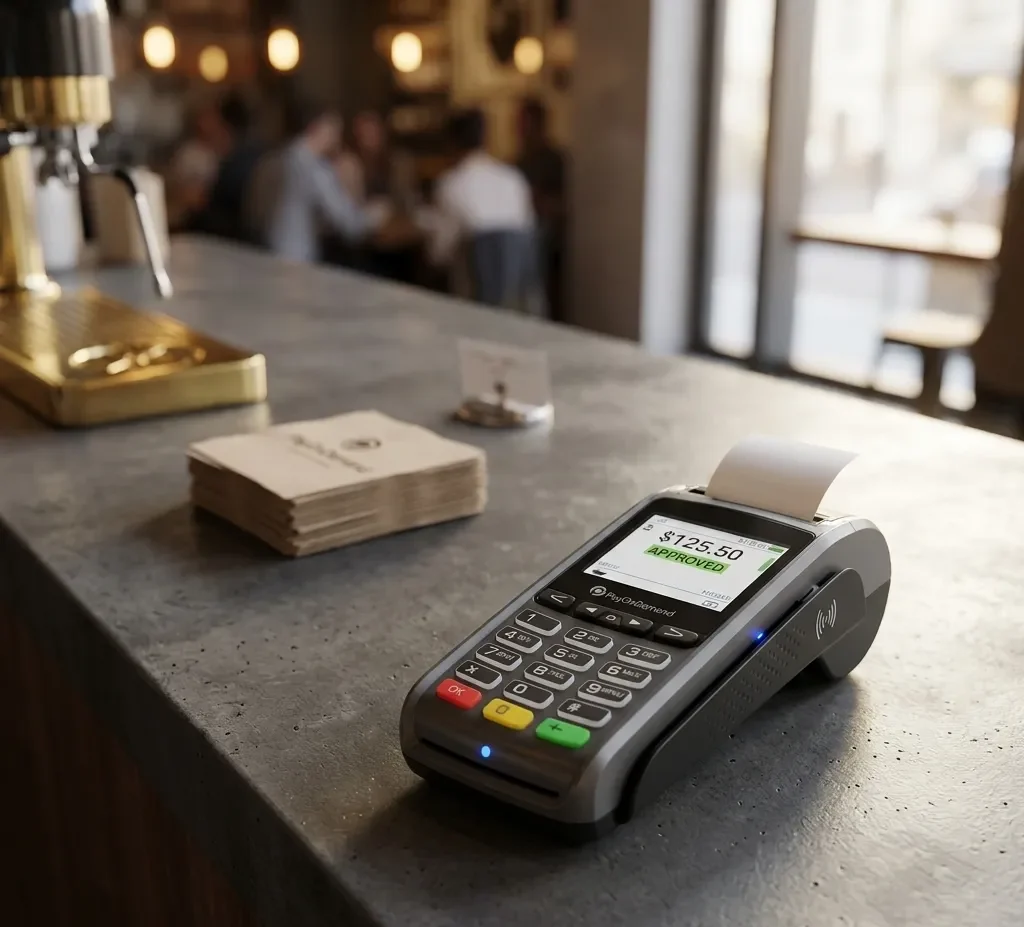
KWIK eCASH offers smart EFTPOS terminals in Australia, helping growing businesses replace slow checkouts with faster, smoother daily payments.
Growing businesses should replace a slow checkout system when delays come from ageing hardware, manual amount entry, weak connectivity or a payment setup that no longer matches service volume. Smart EFTPOS Terminals can remove some of these bottlenecks, but the correct upgrade depends on how and where the business accepts payments.
When Is a Checkout System Too Slow?
A slow terminal is not the only possible cause of a queue. Staff may be switching between disconnected systems, entering amounts twice, carrying customers to a fixed counter or losing time when connectivity drops. Before replacing equipment, record what happens during peak trading periods and identifies the step causing the delay.
Useful warning signs include:
- Staff repeatedly entering sale amounts manually.
- Payment queues forming while service stations remain available.
- Portable payments being required away from the counter.
- Reconciliation taking too long because records must be matched manually.
- Recurring connectivity or terminal issues.
- New locations, counters or service areas needing additional capacity.
This diagnosis matters because a faster device will not fix an unsuitable POS workflow or unreliable internet connection. We help Australian businesses compare EFTPOS options against their actual trading environment rather than treating every checkout problem as identical.
How Smart EFTPOS Terminals Improve Checkout Flow
Smart EFTPOS terminals support contactless cards and digital wallets, while portable models let staff accept payments wherever customers are served. Compatible POS integration can transfer sale amounts automatically, reducing manual errors and simplifying reconciliation. Businesses should confirm terminal features, POS compatibility, network requirements and merchant arrangements before choosing a system.
Our guide to integrated and standalone EFTPOS systems explains the operational differences. Standalone terminals may suit simple payment setups, while integration may help businesses with higher transaction volumes or more complex reporting needs. Hospitality operators can also review our EFTPOS terminal deployment guide for counter, portable and integrated configurations.
What Should You Compare Before Upgrading?
The best option is the one that fits transaction patterns, mobility, integrations, costs and support requirements. The Australian Government’s payment-method guidance for businesses recommends considering customer preferences, reliability, service fees and transaction costs. It also notes that electronic payment systems depend on electricity and telecommunications, although some options may provide offline capability.
Before choosing, compare:
- Payment locations: Decide whether transactions occur at a counter, table, mobile service point, market or event.
- Connectivity: Check the available Wi-Fi or mobile coverage and what happens during an outage.
- POS compatibility: Confirm the exact integration rather than relying on a general compatibility claim.
- Merchant costs: Review terminal charges, service fees, transaction costs and other contract conditions.
- Settlement arrangements: Ask when funds are expected and what conditions apply.
- Support process: Confirm who handles setup, faults, replacements and staff questions.
- Growth capacity: Consider whether the arrangement can support more terminals or locations later.
Our smart POS system overview provides further context on payment technology for modern businesses.
Compare EFTPOS Options with KWIK eCASH
We supply Smart EFTPOS Terminals and related payment solutions for businesses across Australia. The right upgrade should shorten unnecessary checkout steps without adding unsuitable features or unclear operating costs.
Request an EFTPOS comparison with your business type, transaction environment, current POS, connectivity, terminal quantity and main checkout problem. We can discuss relevant options and help you choose a setup suited to daily trading.