
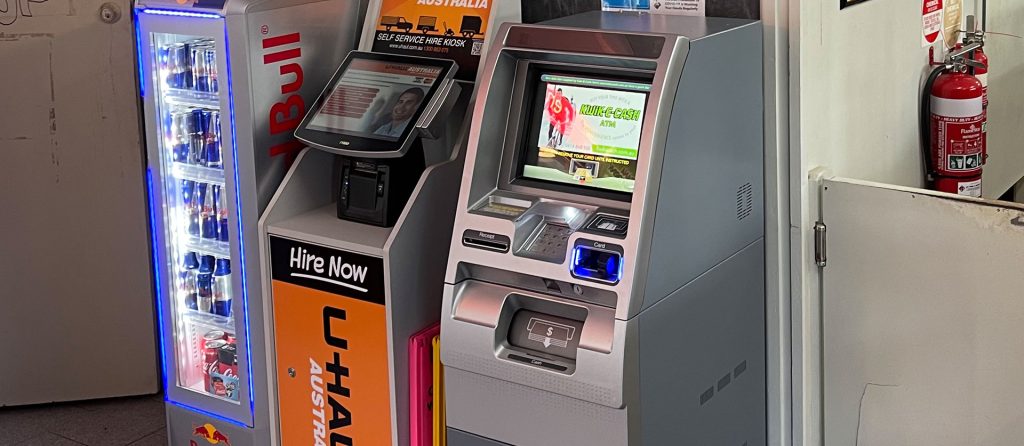
KWIK eCASH explains commercial ATM hire cost in Australia, including key pricing factors, transaction rebates, support inclusions and potential extra fees.
Commercial ATM pricing is usually quote-based because every venue has different trading conditions, customer traffic and service requirements. The commercial ATM hire cost in Australia may involve a regular hire charge, while some venues may qualify for a managed placement arrangement with reduced or no upfront equipment costs, depending on the provider and agreement. Comparing the complete offer is essential because the lowest advertised charge does not always provide the best financial return.
What Determines Commercial ATM Hire Cost in Australia?
The quoted cost can depend on the venue type, location, trading hours, expected withdrawal volume, and agreement length. A busy venue with consistent transactions may qualify for different commercial terms from a smaller business with irregular customer traffic, making an effective ATM placement strategy an important consideration.
The chosen arrangement also affects the cost. Managed placement may reduce upfront and ongoing expenses, while leasing generally involves regular payments and purchasing an ATM requires a larger initial investment plus responsibility for operating costs. Businesses should compare the total financial commitment rather than focusing solely on the monthly charge.
How Do Fees and ATM Rebates Affect the Real Cost?
Venue rebates vary by provider and may come from a share of the ATM direct charge. Compare expected rebates against hire, operating and cash-management costs to estimate the net benefit. The Reserve Bank of Australia explains that an ATM direct charge must be displayed before the transaction is completed, allowing the customer to cancel if they consider the charge too high.
- Hire charges: Check monthly fees, minimum transactions and volume-based charges.
- Rebate structure: Confirm whether rebates are fixed, percentage-based or tiered.
- Eligible transactions: Identify which completed transactions qualify for rebates.
- Operating expenses: Confirm who covers connectivity, cash handling, consumables and repairs.
- Additional charges: Check relocation, damage, termination, renewal and removal fees.
- GST treatment: Confirm whether all quoted figures include or exclude GST.
What Support and Contract Terms Should a Venue Compare?
Reliable support can influence transaction volume, customer experience and the venue’s final return. Operators should assess what is included, how quickly faults are handled and which responsibilities remain with the business before accepting an offer.
- Technical support: Confirm the available support hours, reporting process and expected response times for faults or service interruptions.
- Monitoring and reporting: Ask whether transaction reporting, cash-level monitoring and rebate statements are provided.
- Maintenance coverage: Establish whether servicing, parts, software updates and replacement equipment are included or attract separate charges.
- Cash responsibility: Determine who supplies and loads the cash, how reconciliation works and who carries the risk for discrepancies.
- Agreement length: Review the initial term, cancellation notice, automatic renewal provisions and early termination fees.
- Changing terms: Check whether charges, rebates or service conditions can change during the agreement and how much notice must be provided.
Compare Commercial ATM Hire Costs with KWIK eCASH
Understanding the commercial ATM hire cost in Australia requires more than comparing one advertised fee. A tailored assessment should account for venue type, trading hours, expected transaction volume, rebate terms and included support. KWIK eCASH can prepare a venue-specific quote backed by its advertised guarantee to beat any genuine hire price, helping operators assess the commercial arrangement before committing.
Contact us to request an ATM hire comparison based on your venue and expected transaction activity.